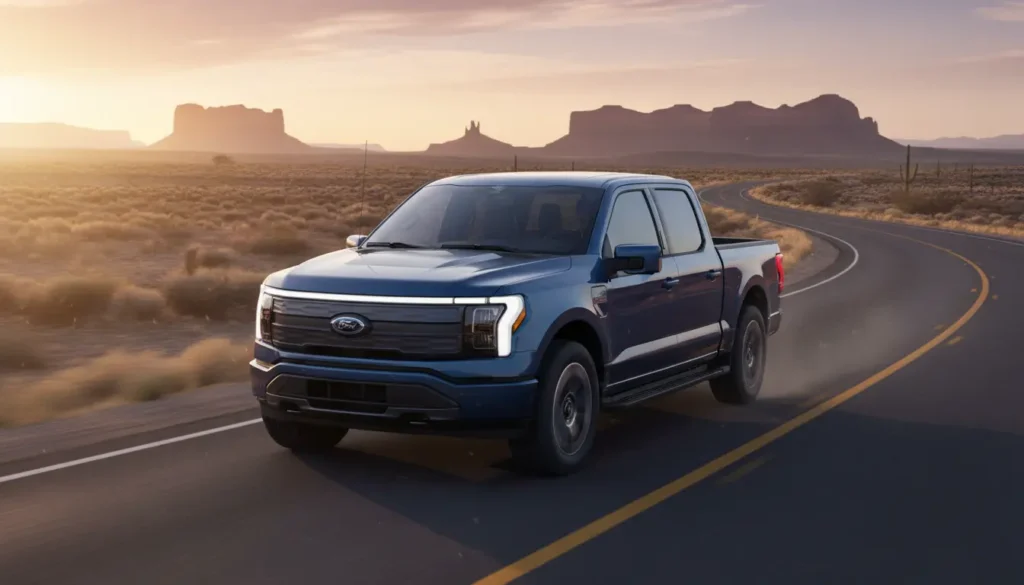
Overview of the 2026 Ford F-150 Lightning Extended Range
The 2026 Ford F-150 Lightning Extended Range is Ford’s updated long-range electric pickup aimed at owners who need serious capability and lower running costs. This version keeps the familiar F-150 layout while extending range, improving charging speed, and adjusting price targets to reach more buyers.
This guide explains the truck’s towing, charging, range, and pricing in practical terms so you can decide if it fits your use case.
Key specs for the 2026 Ford F-150 Lightning Extended Range
Below are the headline specs that matter for daily use, fleet decisions, and towing jobs. Exact numbers vary by trim and options, but these represent the expected range.
- Estimated EPA range: up to about 320 miles on a full charge (varies with load and driving conditions).
- Towing capacity: up to 10,000 lbs with the Max Trailer Tow package.
- Fast charging: DC fast charging capability around 150–200 kW depending on charger and configuration.
- Home charging: compatible with Level 2 charging for overnight replenishment.
- Price direction: starting price lowered versus recent model years, with entry trims targeted in the high $40,000 to low $50,000 range before incentives.
Range and real-world towing with the 2026 Ford F-150 Lightning Extended Range
Electric range is highly sensitive to weight, speed, and weather. Expect significant range reduction when towing. The Extended Range battery gives more usable miles, but you should plan conservatively.
Typical range impacts when towing:
- Light trailer or cargo: 15–30% range reduction versus unloaded driving.
- Moderate trailer (5,000–7,000 lbs): 30–50% reduction, depending on terrain and speed.
- Heavy towing near 10,000 lbs: ranges may fall to under 100–150 miles per charge on hilly or highway routes.
Practical towing tips for the F-150 Lightning Extended Range
To maximize range and safety when towing, follow these practical steps:
- Plan routes that include DC fast chargers and avoid long stretches without charging options.
- Use regenerative braking settings and cruise control on long grades to stabilize consumption.
- Keep trailer aerodynamics and weight distribution optimized to reduce drag and energy use.
Charging the 2026 Ford F-150 Lightning Extended Range
Charging behavior defines usability for long trips. The Extended Range model supports faster DC charging which reduces downtime on long routes. Charging speed depends on charger power, battery temperature, and state of charge.
Charging options to consider:
- Home Level 2 (240V): Add a 40–80 amp charger for overnight charging and full daily replenishment.
- DC fast charging: Use 150–200 kW public chargers to gain substantial range in 20–40 minutes depending on conditions.
- Onboard charger and vehicle-to-load features: Useful for tools and small accessories at job sites.
How to plan charging on a workday
If you tow and need fast turnaround, schedule charging windows: plug in overnight, use midday top-ups if available, and plan stops at high-power chargers on long hauls. Prioritize chargers that maintain higher sustained power rather than those that taper quickly.
Price changes and ownership costs
Ford has positioned the 2026 Extended Range to be more affordable than earlier long-range models. The company reduced starting price ranges and simplified trim choices to make electric trucks more accessible.
Ownership cost advantages to expect:
- Lower fuel cost per mile versus gasoline or diesel trucks, depending on electricity rates.
- Reduced maintenance needs due to fewer moving parts and no oil changes.
- Potential incentives, tax credits, or fleet programs that further reduce effective purchase price.
Estimate example for operating cost
Example: If electricity costs $0.15/kWh and the truck averages 50 kWh per 100 miles while loaded, the cost is about $7.50 per 100 miles. Compare that to a gasoline truck that uses 10 mpg at $4.00 per gallon, which costs $40 per 100 miles. Your results will vary with local rates, driving patterns, and towing loads.
Real-world case study: Contractor using the 2026 Ford F-150 Lightning Extended Range
Case: A mid-size contractor in Texas replaced a gasoline F-150 with the Extended Range Lightning. Typical daily loop was 120 miles with a 6,000 lb trailer for tools and materials.
Results after three months:
- Daily charging: overnight Level 2 at the shop restored range for the next day.
- Towing range: averaged about 90–110 miles per charge on mixed roads while towing, which required one mid-day DC fast charge on long days.
- Operating cost: electricity costs were roughly one-quarter of previous fuel expenses, with reduced maintenance and no oil changes reported.
The contractor kept a backup gasoline vehicle for rare heavy-haul jobs and long remote trips, while the Lightning handled most local work efficiently.
Should you consider the 2026 Ford F-150 Lightning Extended Range?
Choose this truck if you need strong towing capability and want lower operating costs for daily work or hauling. The Extended Range variant helps reduce range anxiety but requires planning for heavy towing and long trips.
Consider these decision points before buying:
- Route planning and access to high-power charging on primary routes.
- The typical trailer weight and how often you tow near maximum capacity.
- Upfront price, available incentives, and total cost of ownership versus a comparable gasoline or diesel truck.
In summary, the 2026 Ford F-150 Lightning Extended Range brings practical electric truck capability to buyers who tow. With improved range, faster charging, and adjusted pricing, it is a viable option for many owners and fleets that can plan charging and match the truck to their routine needs.