The 2026 Volkswagen ID. Buzz brings the classic van silhouette into an electric era with a focus on usable space and simple tech. This guide explains what the ID. Buzz delivers for families, practical use, and ownership basics you should know before buying.
Design and retro charm of the 2026 Volkswagen ID. Buzz
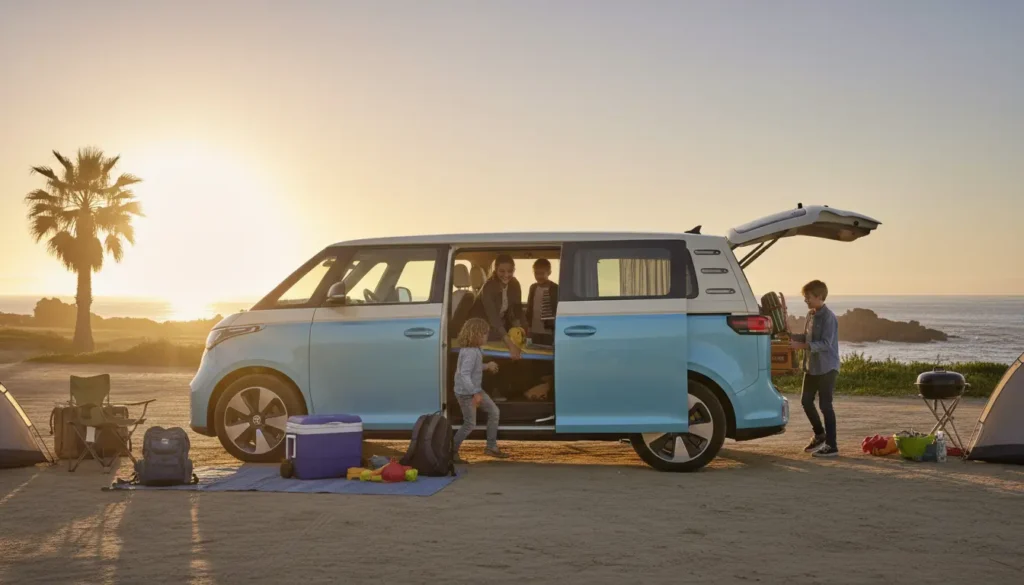
The exterior of the 2026 Volkswagen ID. Buzz keeps the recognizable flat front and rounded corners that echo the original Microbus. Styling is intentionally retro but matched to modern LED lighting and aerodynamic details to improve efficiency.
Practical design choices include large glass areas for visibility and wide doors for easy entry. The overall effect is a friendly, familiar shape with modern execution that appeals to families and lifestyle buyers.
ID. Buzz exterior features to note
- Sliding side doors for tight parking and child access.
- Low step-in height and wide door openings for strollers and cargo.
- Large rear hatch and configurable load floor for bulky items.
Interior layout and family seating in the ID. Buzz
Inside, the 2026 Volkswagen ID. Buzz emphasizes useful space rather than gadgetry. Seats are arranged for flexibility: several trims offer second-row sliding and reclining seats, with options for a removable third row on some versions.
Materials focus on durability and light colors to maintain a spacious feel. Storage solutions are integrated throughout, including deep door pockets and hidden cubbies under seats.
Practical interior highlights
- Flexible seating for five to seven passengers depending on trim.
- Flat cargo floor when rear seats are folded, useful for bikes or camping gear.
- Multiple USB-C outlets and wireless charging for rear passengers.
Driving range, charging, and daily use
The ID. Buzz is built as a battery electric vehicle with targeted range figures that vary by battery and trim. Expect realistic daily use without frequent charging if you plan trips within typical commute distances.
Charging behavior will shape ownership convenience. Home charging overnight and occasional public fast charging on longer trips is the typical pattern for most families.
Practical charging tips for ID. Buzz owners
- Install a Level 2 home charger for overnight top-ups and simpler daily routines.
- Use public DC fast chargers for road trips; plan stops around 20–80% to limit charging time.
- Monitor tire pressure and reduce cargo weight to improve real-world range.
Safety, tech, and driver aids in the ID. Buzz
Volkswagen fits the ID. Buzz with modern driver-assistance systems such as lane keeping, adaptive cruise control, and automated emergency braking. These systems are designed for low to moderate speed assistance and support family driving scenarios.
Infotainment is focused on clarity and connectivity rather than deep customization. Expect a touchscreen with smartphone integration, clear menus, and voice controls for common tasks.
Checklist: Confirm these items when test driving
- Ease of child seat installation and ISOFIX anchor accessibility.
- Visibility from driver’s seat and blind spot coverage.
- Practicality of cargo access and seat folding mechanisms.
The ID. Buzz blends classic van proportions with electric packaging, which often allows a lower floor than combustion vans. That lower floor improves interior headroom and creates a flatter cargo area for easier loading.
Maintenance, running costs, and ownership tips
Electric vehicles typically require less routine maintenance than combustion cars because they have fewer moving parts. That said, scheduled checks, battery health monitoring, and tire care remain important for the ID. Buzz.
Energy costs will depend on your electricity rates and how often you use DC fast chargers. Many owners find home charging is the most cost-effective method for daily driving.
Owning the ID. Buzz: quick tips
- Prioritize a home Level 2 charger installation where possible.
- Keep charging sessions regular to avoid deep discharge cycles.
- Use built-in route planners to find chargers on long trips and estimate charging time.
Case study: A weekend with the ID. Buzz
The Ramirez family borrowed an ID. Buzz for a weekend camping trip to test space and real-world range. With two adults, two children, a stroller, and camping gear, they found the interior adaptable and comfortable for long drives.
They charged overnight at home and used a single public fast charge during the return trip. The family noted easy loading thanks to the flat cargo floor and sliding doors, and they appreciated the calm cabin during the drive.
Who should consider the 2026 Volkswagen ID. Buzz?
The ID. Buzz fits buyers who want a roomy, practical electric vehicle with retro appeal. It is particularly suited to families, weekend adventurers, and buyers who prioritize interior space and easy access over sporty performance.
For those who need maximum towing or high-speed performance, other EV types or larger commercial EV vans may be better suited. But for everyday family use and lifestyle flexibility, the ID. Buzz is a strong candidate.
Final practical considerations for buying the ID. Buzz
When evaluating the 2026 Volkswagen ID. Buzz, test drive with the gear and passengers you typically carry. Confirm charger availability for your home and common routes, and compare trims for the seating and cargo flexibility you need.
Focus on real-world comfort, visibility, and the convenience of sliding doors and flat floors. These practical elements matter most in daily family life and are the core strengths of the ID. Buzz.
Summary checklist:
- Test seat layouts and child seat fit.
- Check home charging options and local public charger coverage.
- Evaluate cargo needs with rear seats folded.
With thoughtful planning, the 2026 Volkswagen ID. Buzz can serve as a practical, spacious electric family vehicle that brings classic van charm into modern use.