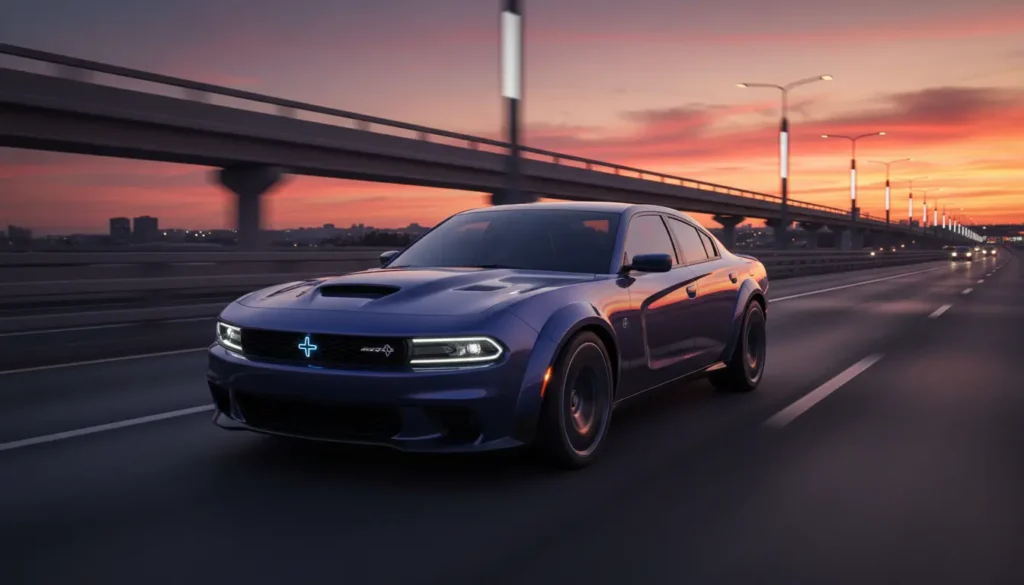
Overview of the 2026 Dodge Charger Daytona
The 2026 Dodge Charger Daytona is Dodge’s new all-electric muscle car aimed at blending classic muscle character with modern EV technology. The model mixes a retro-futuristic look with advanced powertrain options and synthetic acoustic design that echoes traditional V8 tones.
This article breaks down key features, driving and charging expectations, practical ownership considerations, and a short real-world case study to help buyers and enthusiasts understand what to expect.
Design and Retro-Futuristic Look
The exterior design references classic Charger proportions while using modern cues like light bars, aerodynamically shaped bodywork, and a low-slung stance. The goal is to evoke familiar muscle-car lines while improving airflow and efficiency.
Inside, Dodge pairs analog-inspired controls with a digital instrument cluster and a large central touchscreen. Materials focus on a mix of durable surfaces and performance-oriented accents to maintain a driver-centric cabin.
Key styling highlights of the 2026 Dodge Charger Daytona
- Widebody option with widened fenders and larger wheels to enhance road presence.
- LED signature lighting that nods to classic grille shapes but improves visibility.
- Retro interior accents combined with modern infotainment and driver-assist hardware.
Powertrain and Blazing Acceleration
The Charger Daytona arrives on an EV architecture tuned for high output and instant torque. Multiple motor and battery packages are expected, offering a range of performance levels from efficient daily driving to track-capable acceleration.
Electric power enables quick 0-60 times because of immediate torque delivery. Buyers can choose configurations that prioritize acceleration or extended driving range depending on needs.
What to expect from acceleration and driving modes
- Launch mode for maximum torque and quickest starts on the straightaway.
- Comfort and range modes for daily commuting and longer trips to extend battery life.
- Adaptive traction and handling settings to balance grip and performance under different conditions.
Sound: Synthetic Yet Characterful
Dodge has leaned into synthetic sound design to recreate the emotional appeal of muscle cars without mechanical exhaust. The system layers interior and exterior sound profiles to provide feedback at different speeds and drive modes.
Sound tuning is adjustable, letting drivers opt for a louder, more evocative profile or a muted, eco-focused tone for city driving. This approach seeks to preserve the sensory experience many buyers expect from a Charger-branded car.
Battery, Range, and Charging Practicalities
The Charger Daytona’s battery choices target a balance between performance and usable range. Customers should evaluate their typical driving distance to choose the right battery option.
Charging infrastructure and onboard charging speeds will affect daily usability. Faster DC fast-charging options reduce long-trip downtime while home charging remains the most convenient daily solution.
Charging checklist for prospective buyers
- Install a Level 2 home charger for regular overnight charging and convenience.
- Plan for public DC fast-charging access on long trips; check route chargers ahead of time.
- Keep simple charging etiquette in mind: move to a standard spot after fast-charge sessions to free the stall.
Technology and Driver Assistance
The vehicle integrates modern driver-assistance systems including adaptive cruise, lane-keeping assist, and parking aids. Software updates are likely to add or refine features over time.
Connectivity features include smartphone integration and possibly over-the-air (OTA) updates for performance tuning and infotainment improvements. These systems are important to keep the vehicle current without frequent dealer visits.
Ownership Tips and Maintenance
Owning an electric Charger differs from a gasoline muscle car. Routine maintenance is generally lower because the EV powertrain has fewer moving parts, but attention to software updates and battery care is crucial.
Recommended practices include conservative charging habits, periodic software updates, and using approved service centers for high-voltage system checks. These steps help maintain performance and preserve resale value.
Case Study: Regional Demo Day Feedback
At a regional demo day held by a Dodge dealership group, a sample of 50 potential buyers and journalists evaluated the Daytona on mixed city and highway routes. Testers noted immediate throttle response and a surprisingly composed ride for a performance-focused setup.
Participants highlighted clarity of drive modes, ease of use for infotainment, and the novelty of synthetic sound that felt dynamic but not intrusive. Early feedback emphasized the need to confirm local charging options before purchase.
Buying Advice and Practical Considerations
When considering the 2026 Dodge Charger Daytona, match the model and battery to your use case. Choose performance-oriented variants if you prioritize acceleration and handling, and opt for larger battery packs for long-distance commuting.
Check state and federal incentives for electric vehicles that can reduce purchase costs. Also evaluate local charging infrastructure and dealership service capabilities for EVs before finalizing a purchase.
Conclusion: Who Should Consider the 2026 Dodge Charger Daytona
This model is aimed at buyers who want the personality and visual cues of a classic muscle car but prefer the instant performance and lower maintenance of an EV. It suits drivers who value spirited acceleration and a distinct design, paired with modern connectivity and safety features.
Make a plan to test drive different trims, assess real-world charging in your area, and weigh options for home charging installations to ensure the Daytona fits your daily life and performance expectations.