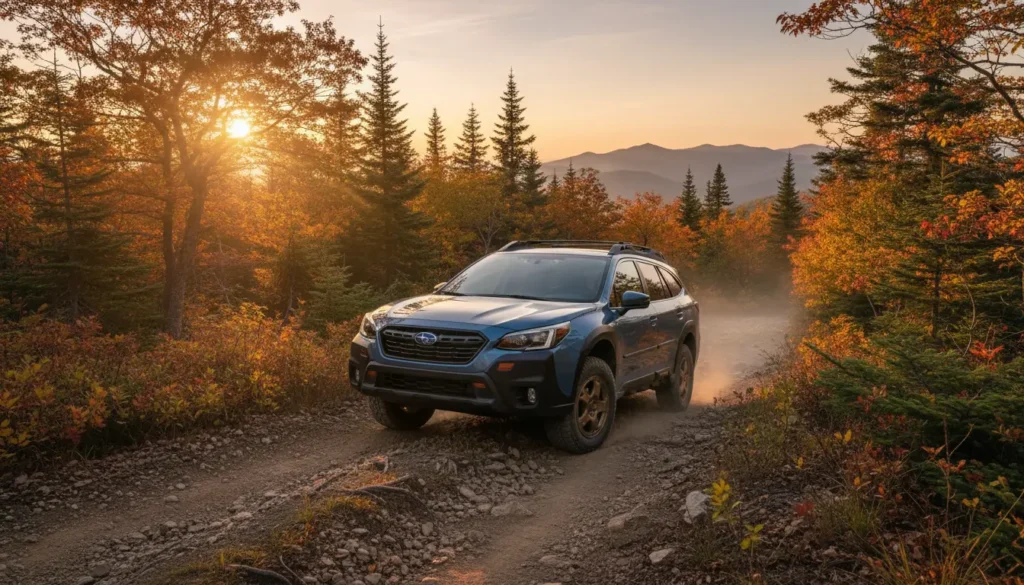
The 2026 Subaru Outback Wilderness brings deliberate upgrades for outdoor use while keeping the Outback’s familiar wagon layout. This article explains what changed, how the all-wheel drive system performs, and what to expect for real-world mileage.
What changed on the 2026 Subaru Outback Wilderness
The 2026 model focuses on rugged hardware and durability. Subaru adjusted suspension, exterior trim, and protection elements to suit trails and gravel roads better.
These changes are practical, not just cosmetic. Expect a higher ride height, beefier tires, and underbody protection that reduces damage risk on rough routes.
Rugged upgrades and exterior changes
Key exterior updates for the 2026 Subaru Outback Wilderness include a raised suspension and larger all-terrain tires. Protective cladding and revised bumpers improve approach and departure angles.
- Increased ground clearance compared with standard Outback
- All-terrain tires sized for rough surfaces
- Skid plates under engine and fuel tank
- Functional roof rails and optional cargo accessories
All-Wheel Drive mastery and off-road systems
The Outback Wilderness continues to use Subaru’s symmetric all-wheel drive with driver-selectable modes. For 2026 the software calibration favors torque distribution useful on loose surfaces.
Features typically included are X-Mode for traction control, hill descent control, and revised stability mapping to keep traction on mud, snow, and gravel.
Engine, powertrain, and mileage for the 2026 Subaru Outback Wilderness
Subaru pairs the Wilderness treatment with the familiar powertrains. The standard turbocharged 2.4-liter boxer engine delivers stronger low-end torque for climbing and towing.
The trade-off is slightly lower EPA-rated fuel economy compared with non-Wilderness Outbacks due to larger tires and higher ride height.
Real-world mileage expectations
EPA numbers give a baseline, but real-world mileage depends on load, terrain, and driving style. Expect combined fuel economy to be 1–3 mpg lower than a standard Outback with the same engine.
- On highways at steady speed: you may see mid-to-high 20s mpg
- Mixed driving with light off-road use: expect low-to-mid 20s mpg
- Heavy off-road or towing: mileage can drop into the mid-teens
Interior, cargo, and practical features for adventure
Inside, the Wilderness model prioritizes durability and utility. Water-resistant seat materials, easy-to-clean cargo surfaces, and smart storage keep gear organized after wet outings.
Infotainment and connectivity are the same as the regular Outback but there are usually added convenience features like multiple 12V outlets and optional 115V inverter for campsite use.
Load planning and cargo examples
Plan cargo by weight distribution and waterproofing. Carry heavier items low and centered to keep center of gravity stable when driving off-road.
- Roof cargo boxes add capacity but increase wind drag and reduce mpg
- Use tie-down points in the cargo area to secure loose items
- Consider a soft cooler and collapsible storage to save space
How to use the 2026 Subaru Outback Wilderness on trails
This section gives a short, practical checklist and driving tips for off-road outings. The goal is to use the Outback’s strengths and avoid common mistakes.
Pre-trip checklist
- Check tire pressure and condition; slightly lower pressure can help on rocky trails but follow recommended limits
- Secure loose cargo and verify recovery gear (strap, shovel, tow strap) is accessible
- Top off fluids and confirm the spare tire and jack are functional
Simple driving tips
- Use low-range-like settings in X-Mode for steep descents and loose surfaces
- Maintain steady momentum on loose surfaces; avoid aggressive braking
- Approach obstacles slowly and scan for the best line to protect underbody components
Case study: weekend overland trip with a 2026 Outback Wilderness
A regional guide used a 2026 Outback Wilderness for a two-day overland trip with two adults, roof cargo box, and camping gear. Route included 40 miles of gravel forest roads and 160 miles of highway.
Results: average fuel economy was 24 mpg for the trip. The clearance and tires allowed higher average speeds on rough road sections with no underbody damage. The guide noted easier recovery while towing a small trailer thanks to improved torque response.
The Outback Wilderness typically adds 0.5 to 1.5 inches of ground clearance over the standard Outback and includes tuned suspension components to protect chassis parts during moderate off-road use.
Who should consider the 2026 Subaru Outback Wilderness?
If you regularly drive gravel roads, camp in remote spots, or need a practical wagon that handles light trails, the Wilderness version is a sensible choice. It balances everyday usability with tougher hardware.
Buyers focused purely on fuel economy or maximum on-road refinement may prefer the standard Outback. But for adventure-minded drivers who want AWD confidence and durability, the Wilderness is purpose-built.
Final considerations: test drive the model on both pavement and a local rough road to assess ride comfort and fuel trade-offs. Check options for protective accessories and roof cargo that suit your typical trips.