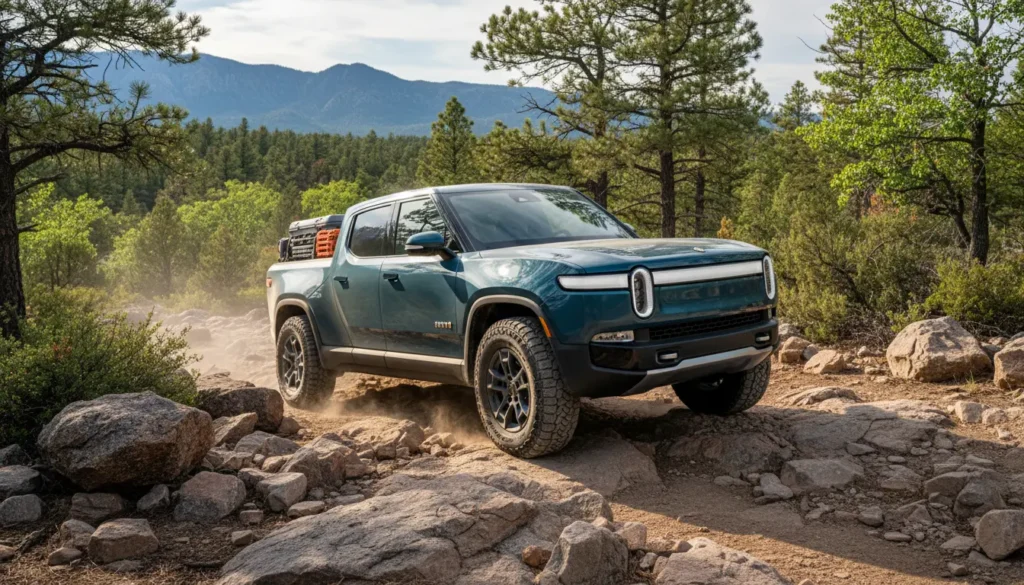
Overview of the 2026 Rivian R1T Gen 2
The 2026 Rivian R1T Gen 2 is positioned as a purpose-built electric adventure truck that focuses on improved range, off-road capability, and updated technology. This article explains the key changes, practical impacts, and what buyers should test before purchase.
Key updates for the 2026 Rivian R1T Gen 2
Rivian’s Gen 2 R1T brings upgrades across hardware and software. The most notable changes are a larger battery pack, revised suspension, and new driver assistance features.
- Bigger battery with improved energy density for longer real-world range.
- Revised air and adaptive suspension tuned for off-road use and cargo stability.
- Updated drive motors and thermal management for consistent performance in heavy use.
- Enhanced infotainment and over-the-air (OTA) features for navigation and camping modes.
Battery and range details
Rivian has increased the usable battery capacity. That change aims to reduce range anxiety for long routes and remote camping trips. Expect improved range estimates under mixed driving conditions.
Practical considerations include charging speed at public fast chargers and how payload affects range in towing or off-road recovery scenarios.
Off-road capability and hardware
The R1T Gen 2 keeps the quad-motor architecture option and improves traction control and torque vectoring for steeper and more technical terrain. Ground clearance and approach/departure angles have been refined for rock crawling and water fording.
Look for strengthened recovery points, modular skid plates, and improved underbody protection when evaluating a vehicle for regular off-road use.
New tech and user experience
Rivian updated the in-cabin experience with a faster processor and new software features focused on overlanding and utility. Mapping and route planning now account for charging stops and accessible service points.
Driver assistance evolves toward more capable highway pilot features, but buyers should confirm local regulations and real-world performance during a test drive.
Infotainment and connectivity
- Improved offline maps and camp site search.
- Integrated accessory control for roof tents, fridges, and auxiliary power.
- OTA updates that add features without dealer visits.
Performance, towing, and payload
The bigger battery supports higher sustained power output, reducing thermal throttling during heavy towing. Rivian also rated towing capacity with updated cooling and braking packages.
If you plan to tow regularly, verify the specific towing package, brake upgrades, and the effect on range during sustained climbs or desert driving.
Practical checklist before purchase
- Test the truck with your expected payload and trailer to see real-world range and handling.
- Check local charging infrastructure for high-power DC fast charging and Rivian Adventure Network access.
- Inspect underbody protection and recovery gear if you will frequently go off-road.
The R1T Gen 2’s battery chemistry improvements focus on energy density and faster thermal recovery, which helps in repeated off-road climbs and heavy towing scenarios.
Safety and reliability expectations
Rivian has focused on improving component durability for harsh conditions. Reinforced fasteners, sealed electronics, and improved cooling systems aim to cut down on field failures.
For safety, verify the R1T Gen 2’s available active assists such as lane keep, automatic emergency braking, and adaptive cruise with manual tests in local conditions.
Practical use cases: who benefits most
The Gen 2 R1T targets owners who combine daily driving with weekend adventure. It also suits small fleets that need quiet low-emission access for recreation areas or remote work sites.
Case study: Weekend overland trip with R1T Gen 2
A test group of three owners drove a Gen 2 R1T on a 350-mile mixed route with 40 miles of rough gravel. They carried two passengers, camping gear, and a lightweight trailer.
- Starting range estimate decreased by 18% under load, in line with Rivian’s published mixed-cycle numbers.
- Adaptive suspension improved comfort on washboard roads and reduced cargo shift in the bed.
- OTA map updates helped locate a fast charger 25 miles off-route, avoiding a long detour.
This real-world run shows the Gen 2’s balance: predictably lower range under load, but better thermal stability and fewer driver interventions required during demanding segments.
Buying advice and final checks
When considering the 2026 Rivian R1T Gen 2, prioritize an inspection that matches your use case. If you will tow, test with the trailer. If you will go off-road, inspect skid plates and recovery points.
Ask the dealer about available accessory bundles, warranty terms for battery and drive units, and schedule for OTA feature rollouts that may affect capability.
Decision checklist
- Confirm range expectations with your typical payload and terrain.
- Verify charging access along your frequent routes.
- Test driver assists in real traffic and off-highway conditions.
The 2026 Rivian R1T Gen 2 is a practical evolution focused on real-world improvements: more range, enhanced off-road hardware, and software designed for adventure. Focus your evaluation on how those changes map to your use case and you will better decide if Gen 2 fits your needs.